Think in Three Zones
The most effective closet organization starts with a simple conceptual map: divide your closet into three vertical zones — top, middle, and bottom — each serving a different purpose based on frequency of use and item type.
Closet Zone Map
Seasonal & Rarely Used
Daily-Use Hanging Items
Short Items + Under-Hang Space
Drawers, Shoes, Boxes
Upper Zone: High-Value Real Estate
Most closets have 30–50cm of unused space above the primary hanging rail. This is prime storage territory for seasonal items: winter coats, summer linen sets, rarely-used bags, and holiday items. Use flat-lid storage boxes (Daiso or Seria) with clearly labeled fronts.
Tip: Never store anything here that you need more than 4 times per year. Reserve it strictly for low-frequency items.
Middle Zone: The Daily Highway
This is the most-accessed zone — your hanging clothes, frequently reached shelves, and daily accessories. Items here should be organized by category (tops, bottoms, outerwear) and then by color within category. Use uniform hangers to create visual calm and prevent the "cascade effect" where clothes at different heights create visual noise.
Lower Zone: The Workhorse
The floor and lower shelf space should contain your most-used items: frequently worn shoes, daily-access boxes, and drawer units holding folded clothes, underwear, and accessories. The lower zone is where Daiso and Seria stackable box systems shine.
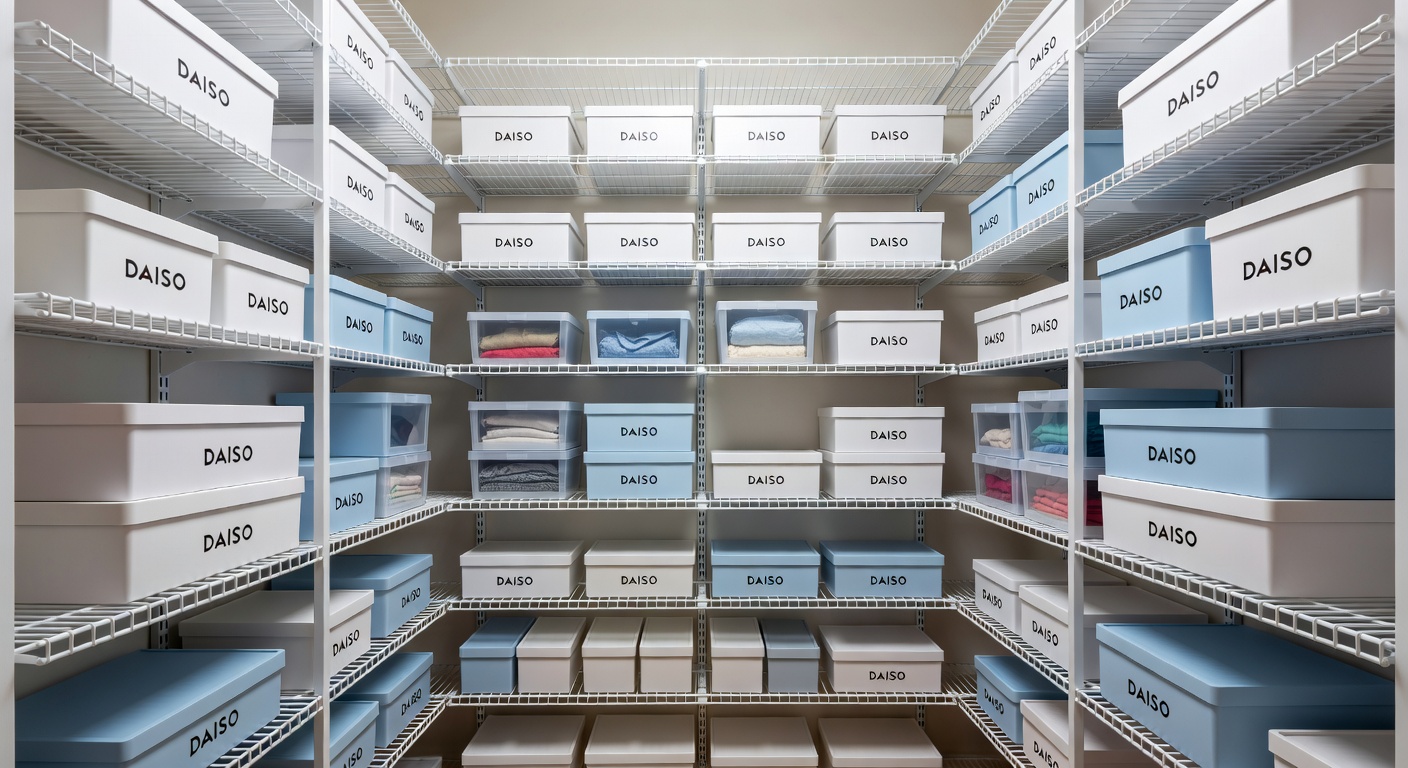
Vertical grid panels add structure and hanging points in places where fixed shelving cannot reach — the key to maximizing depth and height.
The Vertical Space Revolution
The single greatest waste in most closets is vertical space. The average Japanese closet (押入れ, oshiire, or クローゼット, kurōzetto) extends 180–220cm in height, but most people use only the bottom 150cm — leaving 30–70cm of overhead space completely empty.
How to Reclaim Vertical Space
- Add a Second Hanging Rail: If your hanging items are predominantly shirts, jackets, or folded trousers, your primary rail is only using the top 80cm of hang space. Add a Daiso rail extension hook to create a second rail below — doubling your hanging capacity.
- Install Shelf Risers: Daiso and Seria's shelf risers sit on existing shelves and create a second level, effectively doubling flat shelf storage capacity with no drilling required.
- Mount Grid Panels on the Back Wall: The back wall of a deep closet is often a wasted vertical surface. Grid panels mounted here (or leaning against the wall with stand attachments) create a hanging pegboard for bags, belts, accessories, and small items.
- Use Door Space: The inside of a closet door is premium vertical real estate. Over-door organizers, hooks, and pocket panels from Daiso or Seria can hold shoes, accessories, scarves, and small items.
- Stack Rather Than Layer: Instead of laying items flat on a shelf (which limits access to items at the back), stack them vertically in labeled boxes. Stacking in boxes means every box is equally accessible without disturbing others.
The Hanger Audit
Non-uniform hangers waste up to 20% of hanging rail space and create visual chaos that makes it harder to find items. Replace all hangers with one consistent type — slim velvet hangers in grey or black take up half the space of standard plastic hangers, grip clothes firmly, and create a visually peaceful rail.
Daiso and Seria both carry slim velvet hangers. Budget ¥550–¥770 for a complete rail overhaul. The difference in accessible space and visual calm is significant.
The Color Gradient Method
Once hanging clothes are on uniform hangers, organize by color — lightest to darkest, left to right — within each category (all tops together, all bottoms together). This creates a visual scan pattern that means you can locate specific items in seconds.
This is one of the simplest, highest-impact changes you can make to a wardrobe — and it costs nothing. Clothes stay organized naturally because the "wrong" placement is immediately visible.
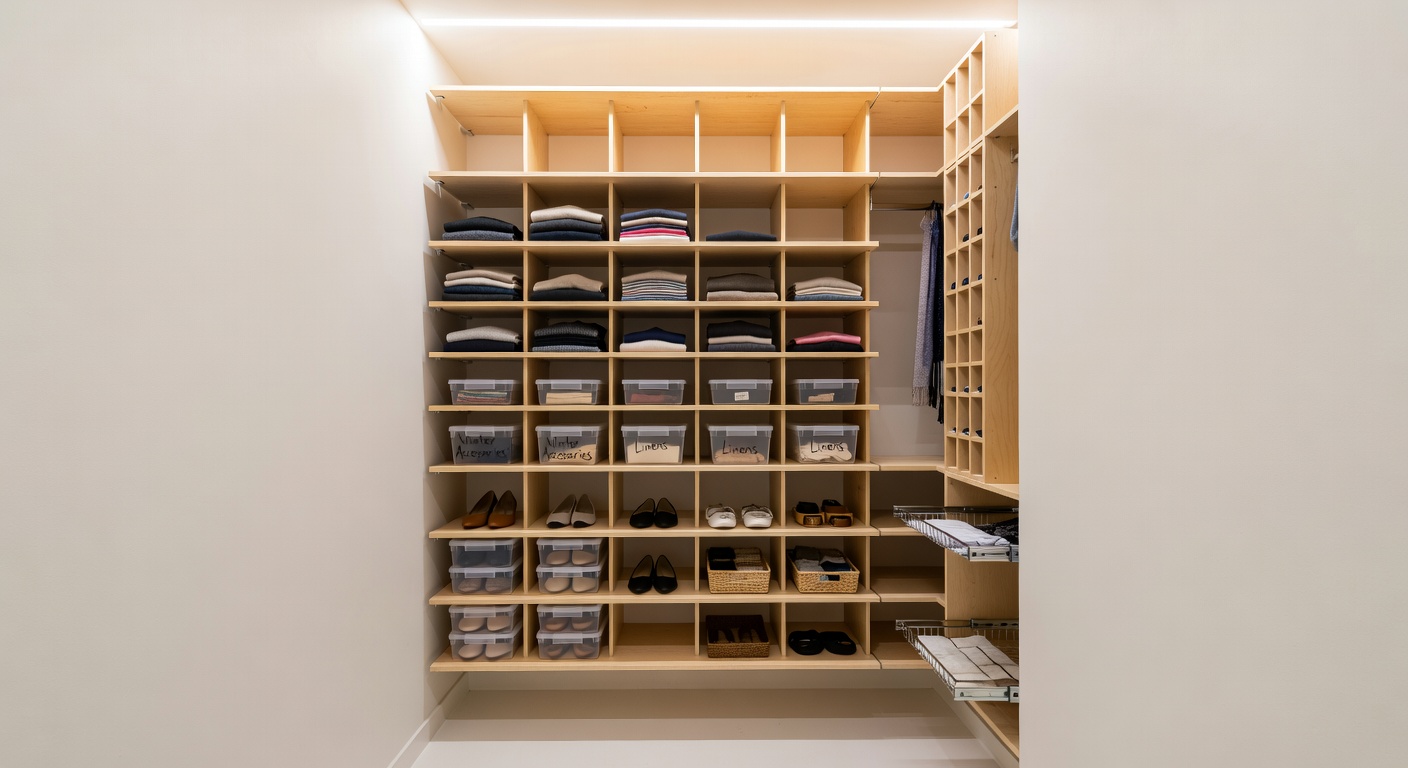
A compact closet fully maximized — double rails, door organizers, shelf risers, and labeled boxes using every available centimeter.
Small Closet, Big Impact: A Step-by-Step Plan
For those with very limited closet space — a single 90cm-wide wardrobe or a small oshiire — here is a proven sequence for maximum impact.
Measure Everything First
Before buying any organizing products, measure your closet's width, height, depth, and the dimensions of each shelf. Bring a measuring tape to Daiso or Seria — you'll need exact dimensions to choose boxes that fit perfectly side by side without gaps.
Remove Everything & Clean
Empty the closet completely. This is also the moment for your Danshari sort — nothing goes back without earning its place. While the closet is empty, clean shelves and walls, and note any damage or hardware issues to address before organizing.
Map Your Zones on Paper
Sketch a simple diagram of your closet with the three zones marked. Write what category of items goes in each zone before you start placing anything. This planning step prevents the common mistake of running out of prime space for frequently used items.
Install Hardware Additions
Add your second hanging rail, shelf risers, door organizers, and any grid panels before putting items back. This is the only time when all surfaces are accessible. Installing additions with a full closet is frustrating and inaccurate.
Return Items Category by Category
Place items back in zone order: upper zone first (seasonal), then middle zone (hanging daily items), then lower zone (boxes, shoes, drawers). Within each zone, place the least frequently used items first, most frequent last — they'll be at the front.
Label Every Box and Basket
Label every container with its contents. This seems minor — it is transformative. Labels prevent the gradual return of miscellaneous items to "temporary" locations that become permanent. Labels keep everyone in the household aligned.
The 80% Rule for Closets
A Danshari-organized closet should ideally be only 80% full. The remaining 20% is not wasted space — it is operational breathing room. It allows items to be returned easily, prevents compression damage to fabrics, makes change-of-season swaps effortless, and visually communicates "this space is under control." A 100%-full closet feels stressful and becomes harder to maintain.